Insect Proteins
Efficient grinding systems for animal alternatives
Various studies by the Food and Agriculture Organization (FAO) show that insects are a highly nutritious and healthy food source with a high content of fat, protein, vitamins, fibre and minerals. Edible insects and products made from them are considered to be one of the most efficient and sustainable protein sources of the future to meet the increasing food requirements of a growing world population. However, processing them places special demands on the process technology: the raw materials often contain fat or chitin, are hygroscopic or thermally sensitive.
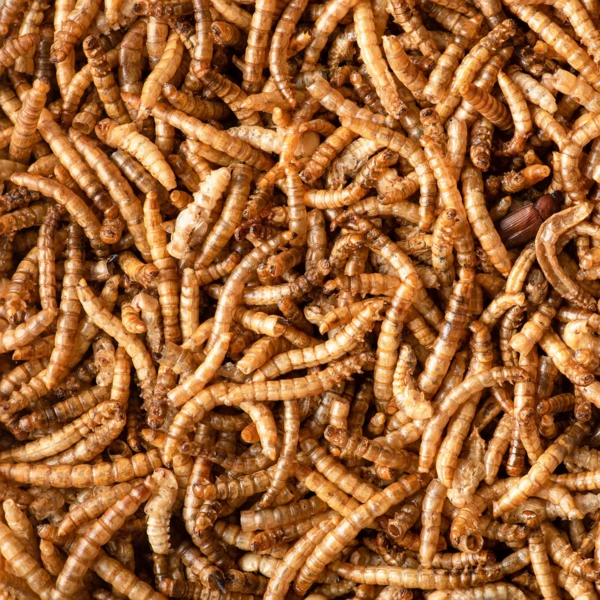
NETZSCH offers tailored grinding systems for processing whole insects, dried larvae, or intermediate products. Our solutions enable reliable size reduction to the desired fineness – with high throughput and low energy consumption. Combined with mixing technologies, homogeneous flours or compound products can be produced, for example for feed applications or functional protein formulations.
Our hygienic design machine concepts simplify cleaning and meet standard food safety regulations. For more demanding requirements, we also offer ATEX-compliant versions. NETZSCH supports you from the selection of the right technology through to safe, validated implementation – including pilot-scale trials in our technical centers.

Request a Quote
Your process, our strength
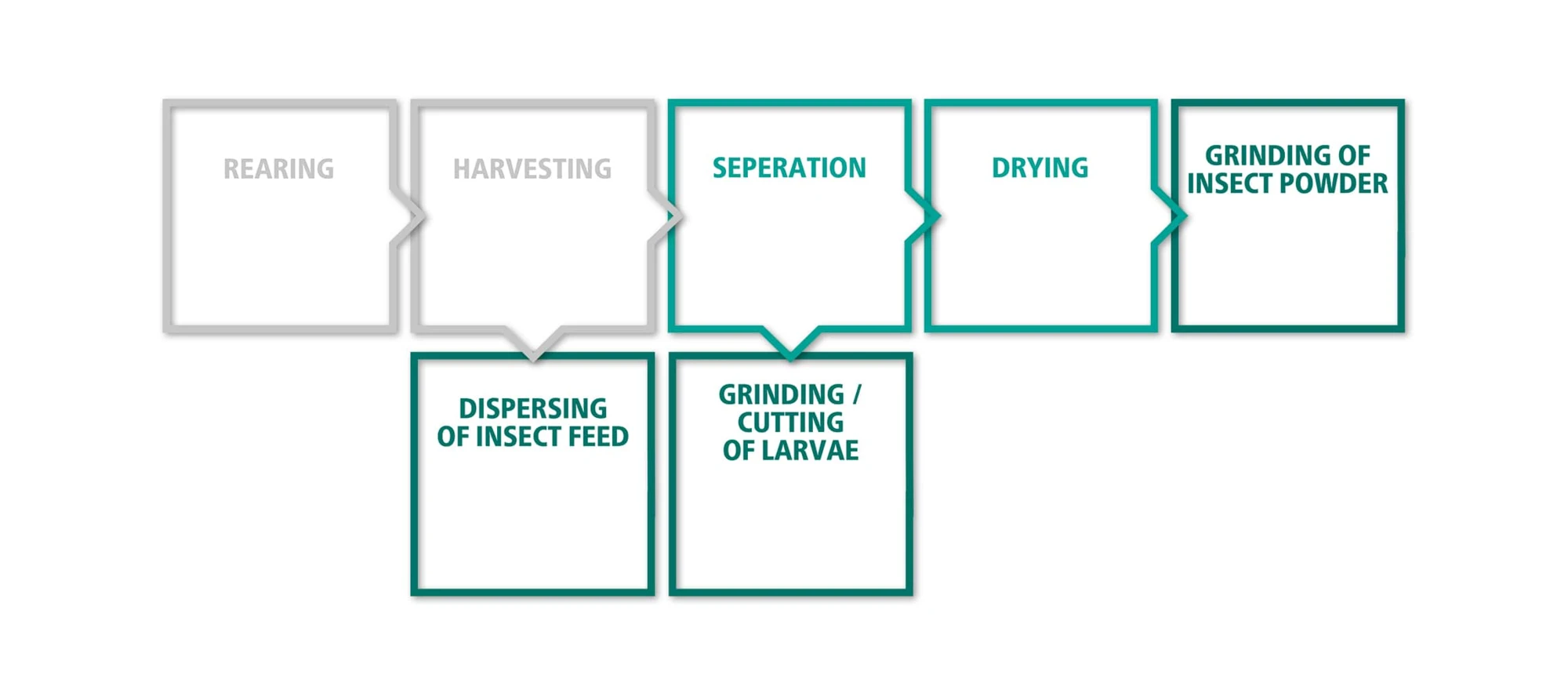
From separation, we support you with customized solutions right through to the finished insect protein
Application Example Wet Processing
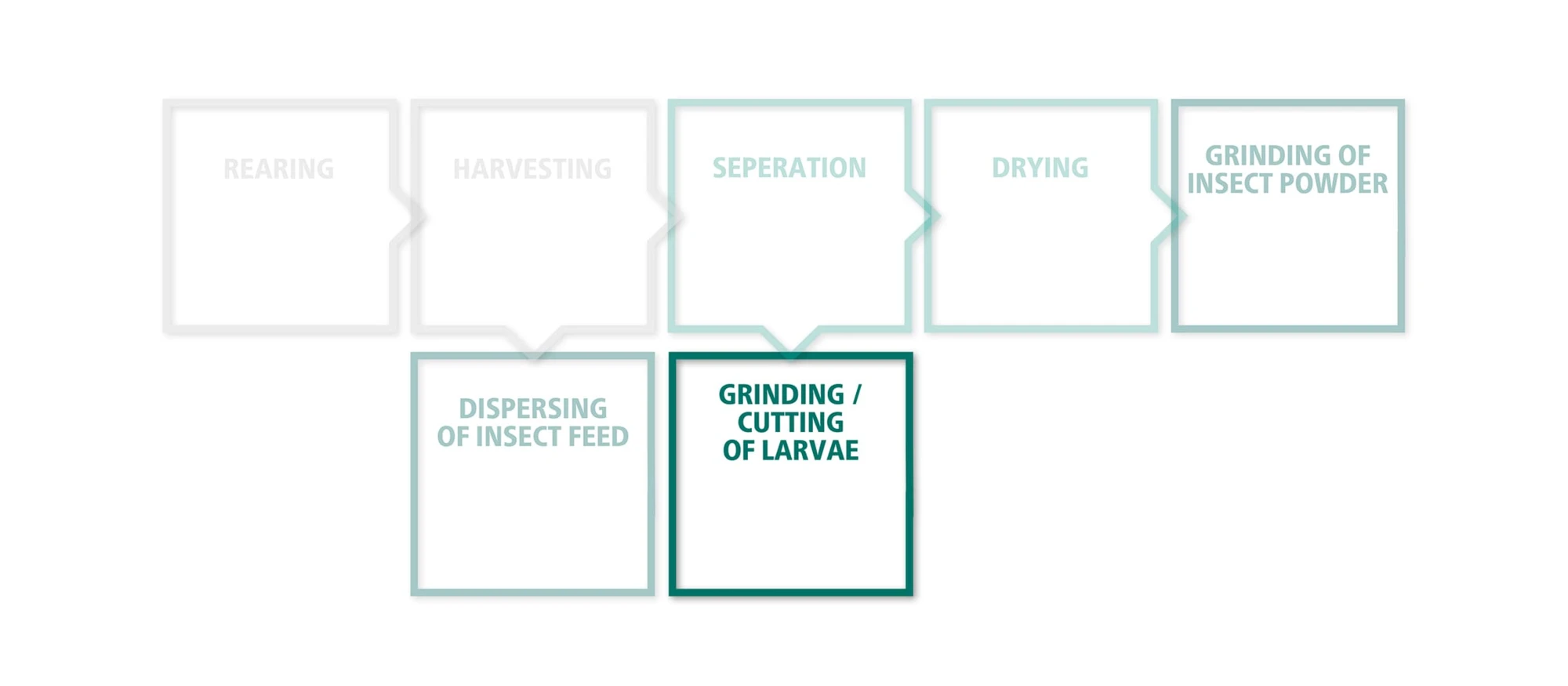
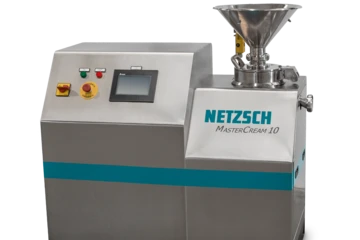
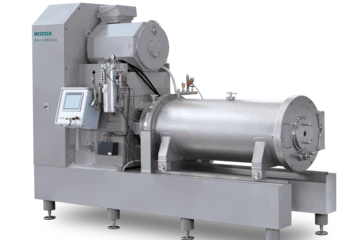
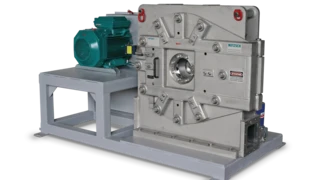
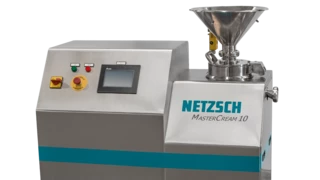
Wet processing with the Pre-cutting System MasterCream and the Horizontal Disk Mill MasterRefiner
Processing products in their wet state offers a range of advantages. Liquid or pumpable materials can be transported more easily within the production line – whether to the next processing stage or through thermal steps such as pasteurization. Wet processing also optimizes certain procedures, such as the removal of the chitin shell in insect-based raw materials. This shell can be removed more effectively as long as the product has not been roasted or dried – for example, when processing blanched or frozen larvae, whole insects, or insect frass.
One of the key challenges in wet processing is the effective separation of fats, water, and solids – and the prevention of emulsions during processing. This is where the sharp knives of the Pre-cutting System MasterCream come into play: they cut the material cleanly instead of crushing it, which minimizes excessive shear forces. Processing at controlled temperatures below 40 °C ensures a particularly gentle treatment of the product, even at high throughputs of up to 8 t/h. This precise control of the cutting process is critical to the final product quality and significantly improves the efficiency of all downstream processing steps.
Application Example Dry Grinding
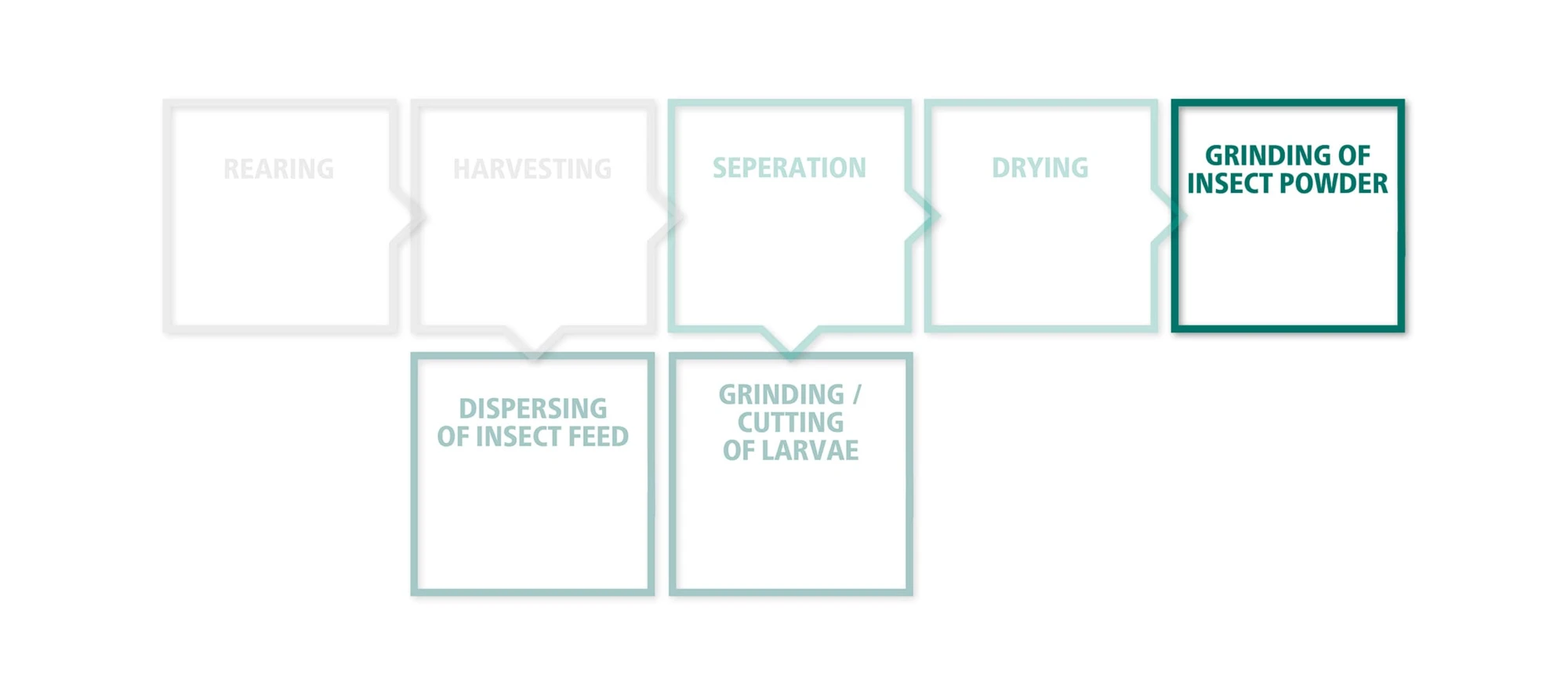
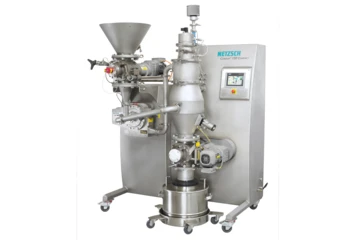
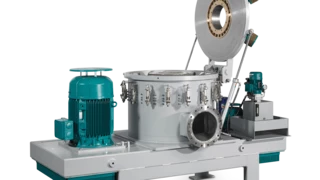
Dry grinding of insect proteins with the Fine Impact Mill Condux® Compact
Following suitable pretreatment – such as defatting – insects can be processed in dry form using the Fine Impact Mill Condux® Compact, without compromising texture or consistency. Insect powder with an input particle size of 1 mm to 5 mm and moisture content of up to 10% can be ground efficiently. The system allows for final finenesses ranging from 10 μm to 500 μm, producing a fine powder that can be easily blended with other ingredients.
Another major advantage of dry grinding lies in the significantly extended shelf life of the insect protein. By reducing moisture content, microbial growth is greatly slowed, resulting in improved storage and transport stability. This is particularly beneficial for logistics and shipping, as it increases efficiency and reduces costs.
Do you have any questions?
FAQ
Application Literature
Our Partnerships
Joining forces to deliver complete process solutions for insect proteins