Agrochemistry Systems

Sulphur Plant

New process technologies for sulphur grinding

Importance of Sulphur in Agrochemicals

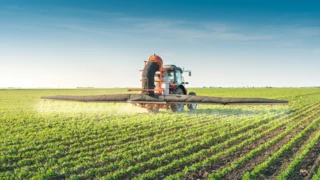
Sulphur plays a vital role in the production of agrochemicals. It is used both as a fertilizer and as a fungicide.

  • As a fertilizer, sulphur is an essential macronutrient that supports plant growth and improves crop yields.
  • As a fungicide, it is applied to control fungal diseases and protect plants effectively.

The finer the sulphur is ground, the faster and more efficiently it can be absorbed. This leads to better plant performance while reducing environmental impact.

The Sulphur Plant Process

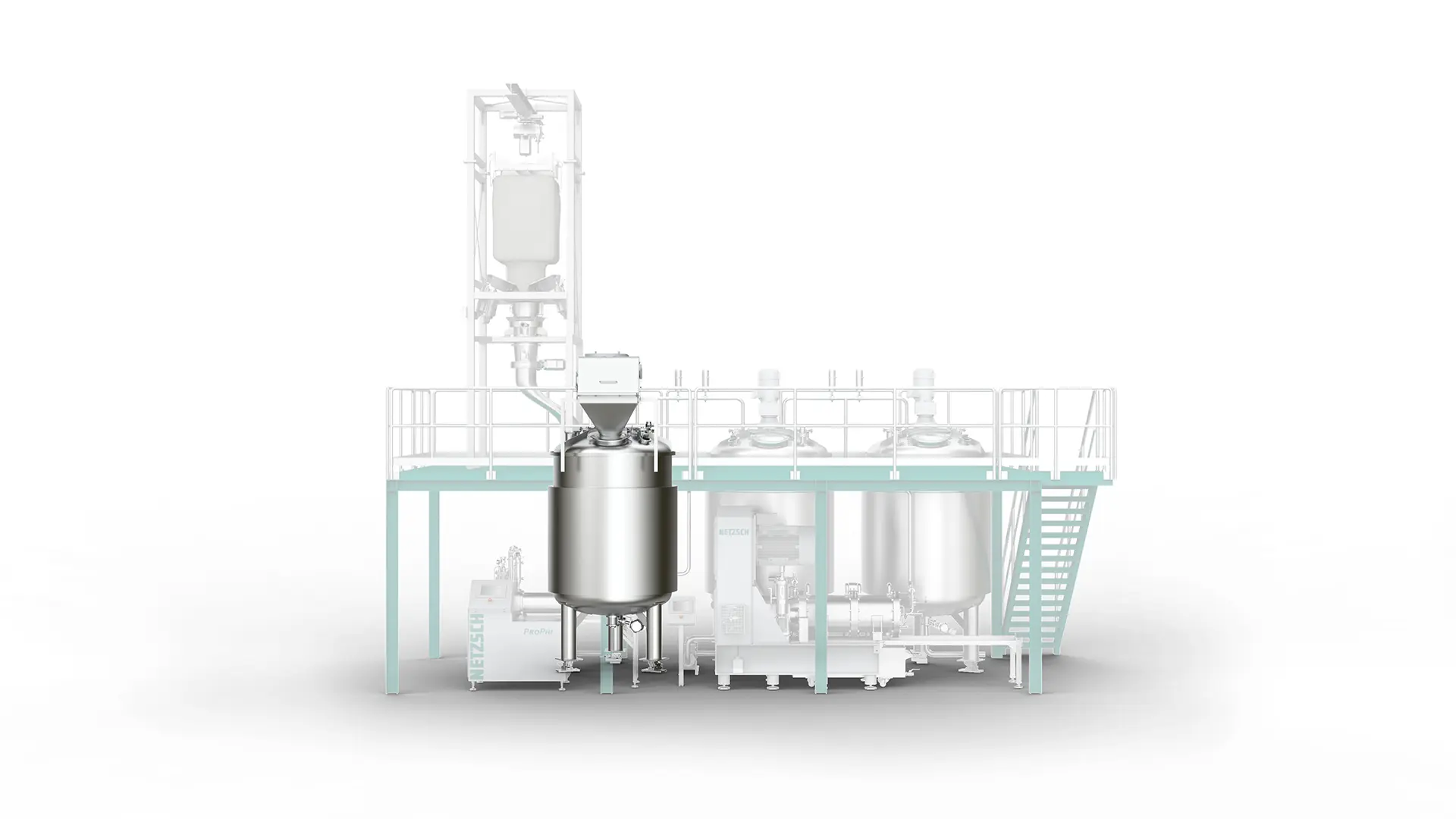
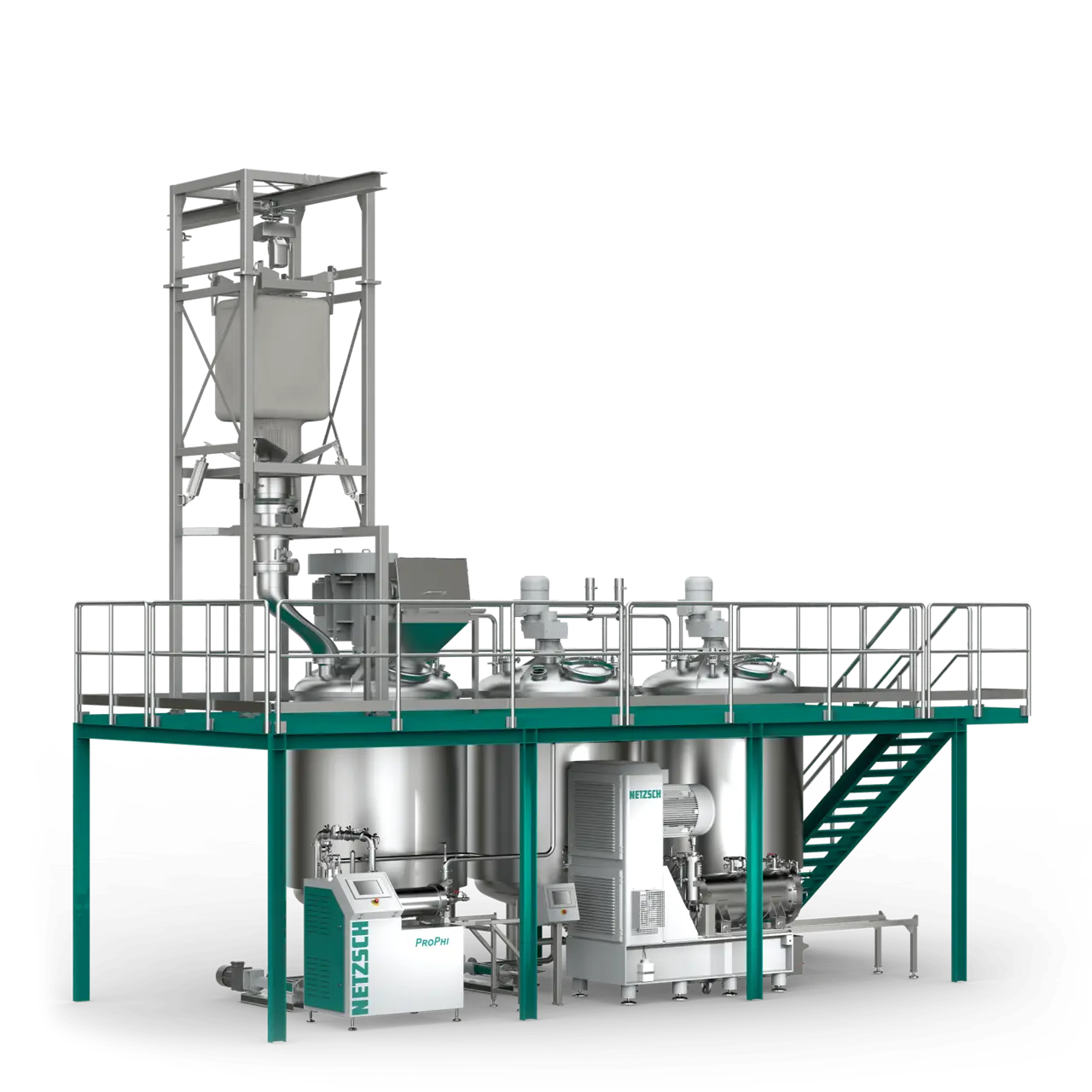
The NETZSCH Sulphur Plant is designed as a modular system with clearly defined steps to ensure efficient production from start to finish:

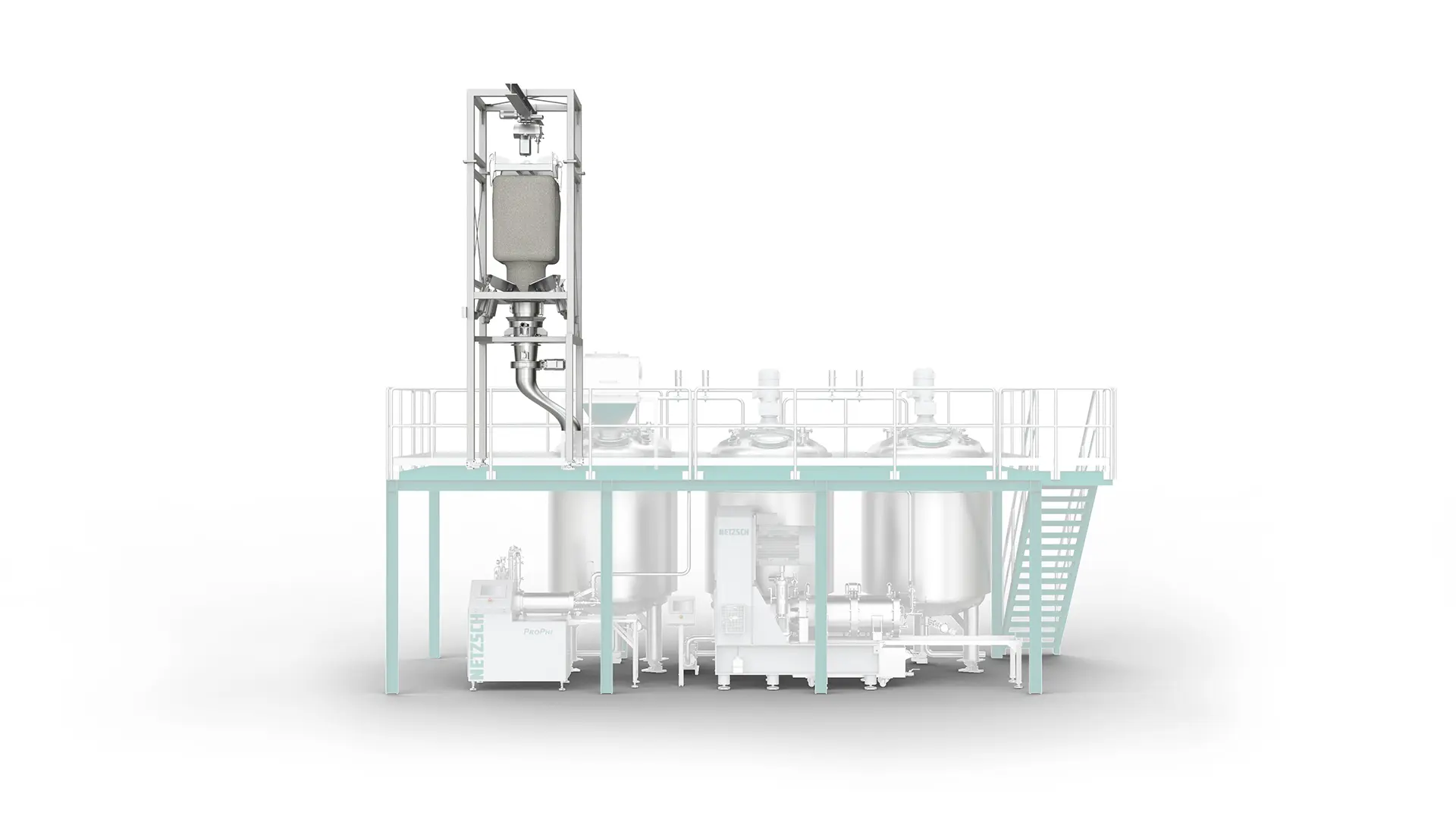
Sulphur Grinding PlantFeeding Sulphur PlantImpact Mixing and Dispersing Sulphur PlantPre-Grinding Sulphur PlantFine Grinding Sulphur Plant
Feed material
Feed material

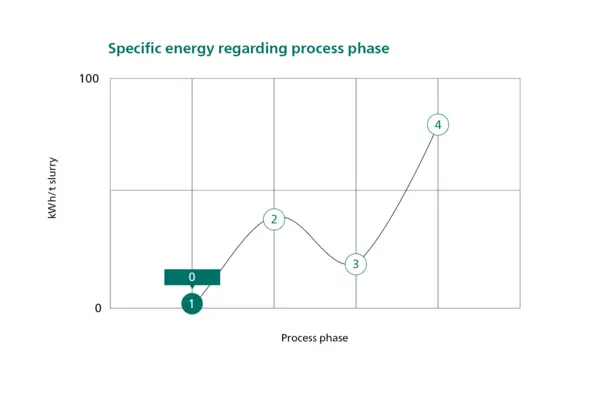
The new process developed by NETZSCH makes it possible to start with relatively coarse sulphur lentils or granules of approx. 3-10 mm. The feed material used can be lumpy/hygroscopic type solids or coarse and porous type solids.

  • Crystalline
  • Flakes
  • Nibs
  • Granulates

Quality steps of the new impact mixing and dispersing process of Sulphur SC-formulation

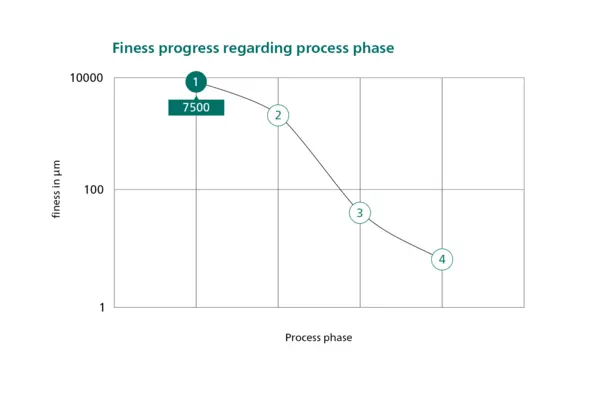
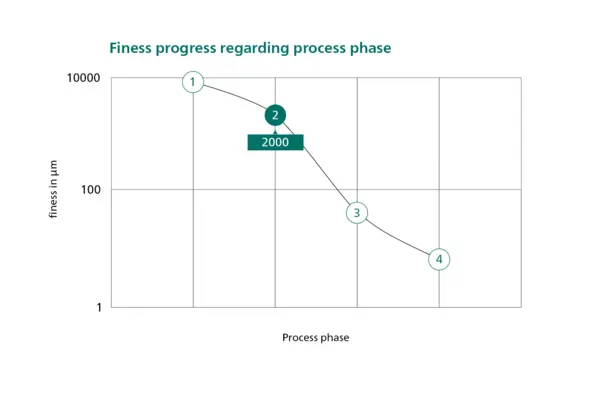
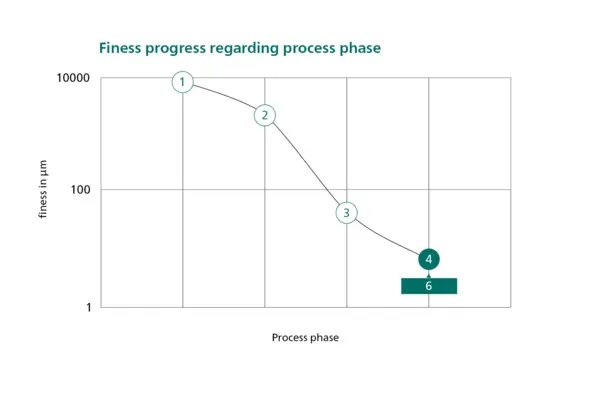
Graph illustrating fineness progress during the phases of sulphur grinding, showing a decrease from 7500 µm to below 100 µm.
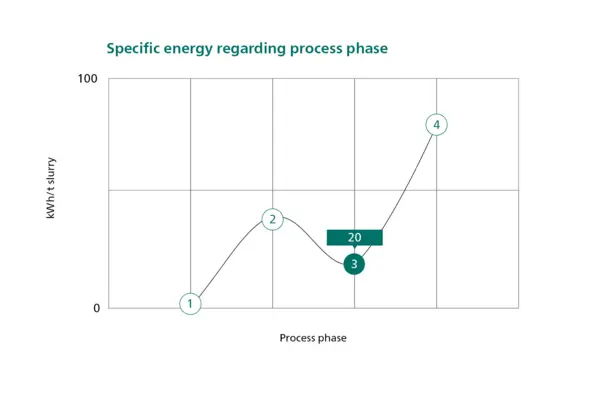
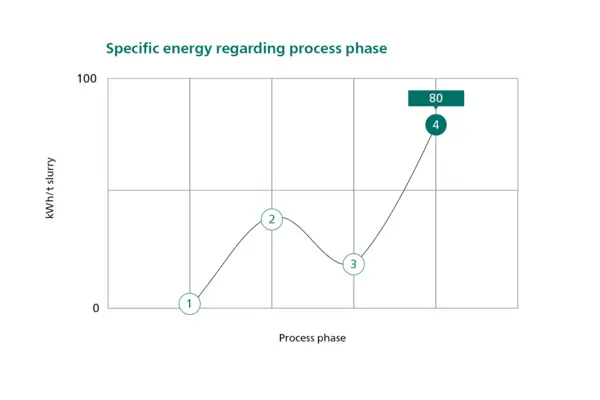
Graph illustrating specific energy consumption across various phases in the sulphur grinding process, highlighting efficiency.
Product after Impact Mixing and Dispersing

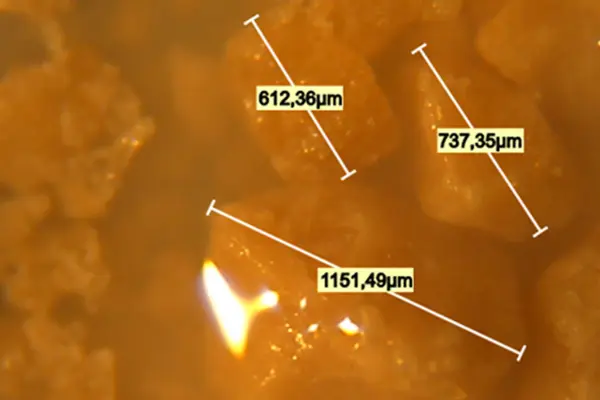
The feed material is mixed and dispersed in the liquid component using a special high speed dissolver with a new impact mixing and dispersing tool. After this process step, the particle size in the coarse suspension is approximately 1 mm to 2 mm.

Quality steps of the new impact mixing and dispersing process of Sulphur SC-formulation

Graph illustrating the fineness progress of sulphur during the grinding process phases, showing decreasing particle size.
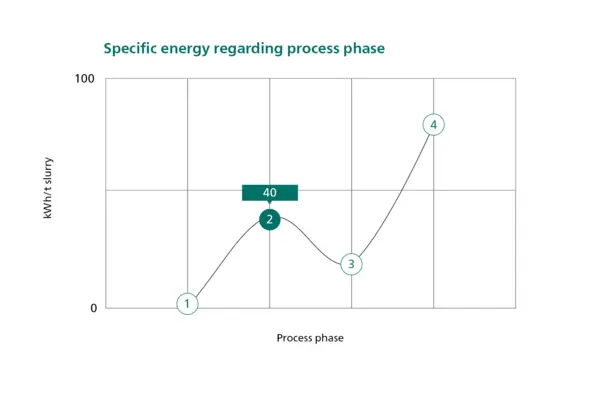
Graph illustrating specific energy consumption across different process phases in sulphur grinding, indicating efficiency trends.
Product after Pre-Grinding

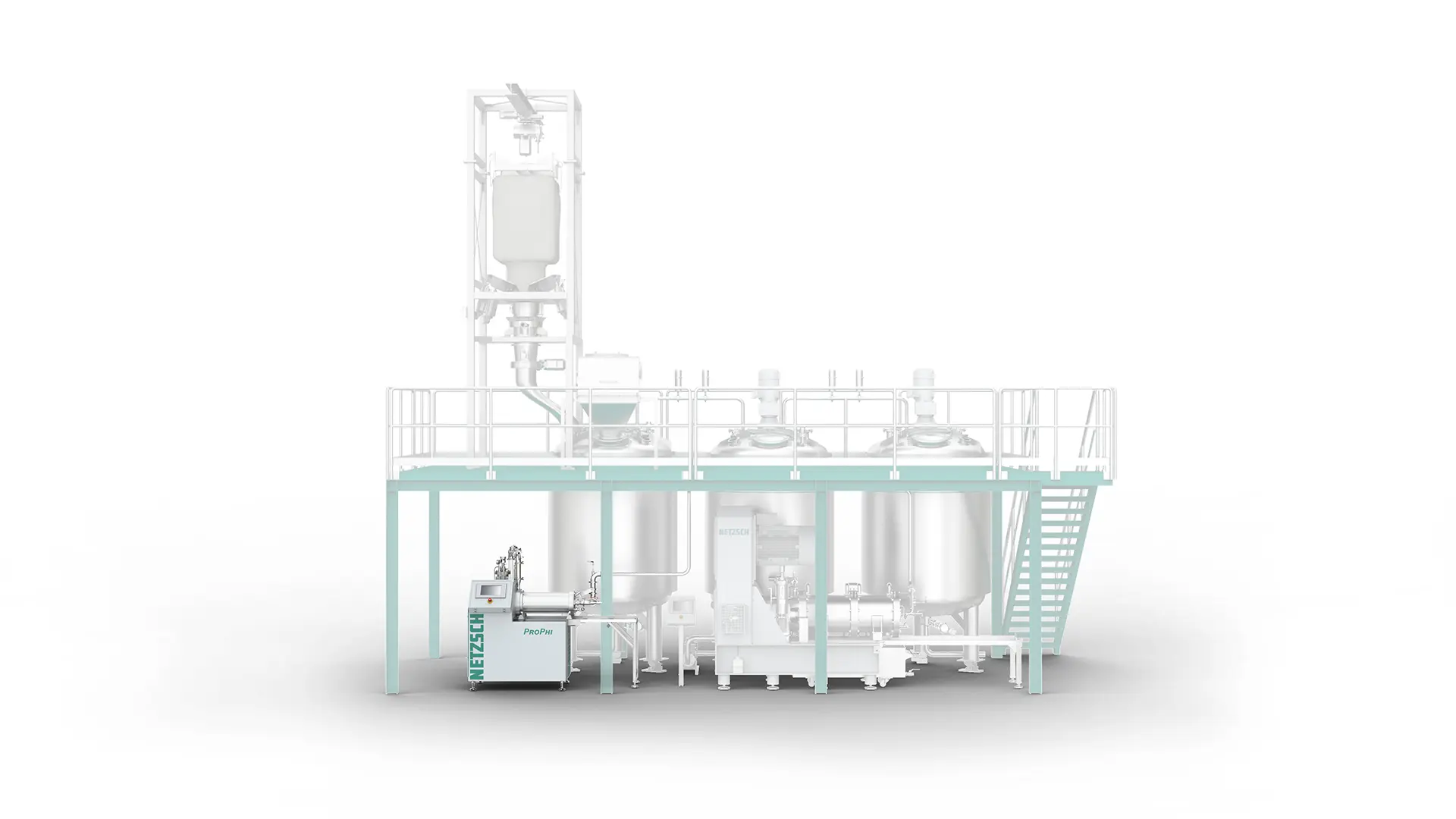
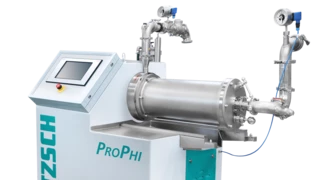
In the pre-grinding/pre-dispersing stage, with the NETZSCH ProPhi, a special type of pre-mill, coupled to the mixing process and running in the by-pass mode, the coarse suspension is pre-ground to a product fineness of d90 = 30 µm to 45 µm.

The new pre-milling technology improves the dispersing process in such a way that all subsequent production steps benefit from it. The total pre-dispersion time is reduced by up to 50%.

Quality steps of the new impact mixing and dispersing process of Sulphur SC-formulation

Graph showing the fineness progress of sulphur grinding phases, illustrating particle size reduction during processing stages.
Graph illustrating specific energy use across different process phases in sulphur grinding. Optimizes energy efficiency in agrochemical production.
Product after Fine Grinding

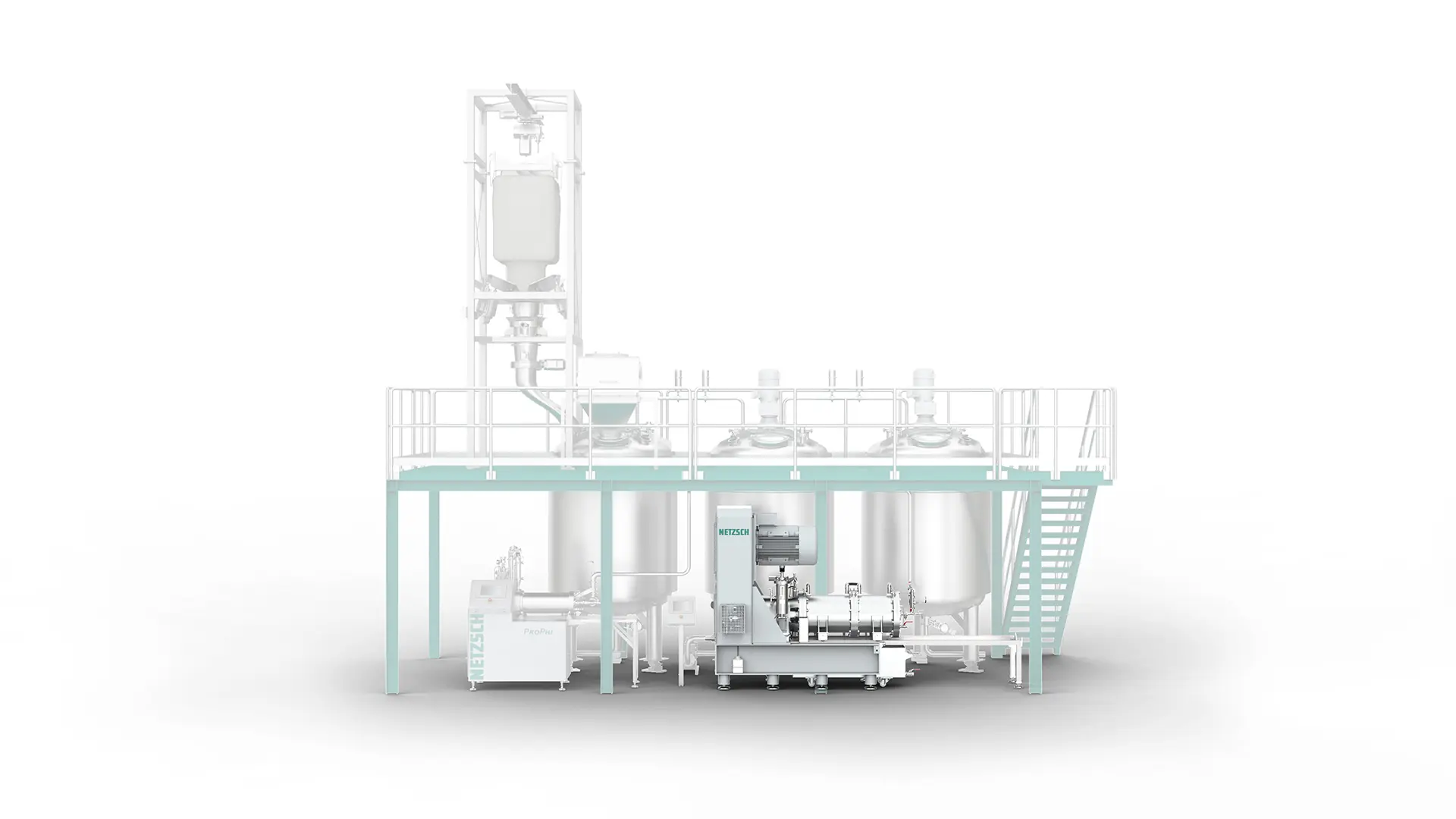
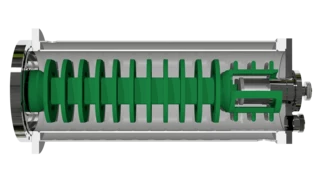
Compared to the conventional process, in which two mills are typically operated in series, the new NETZSCH process uses only one Discus agitator bead mill in the subsequent process step of wet fine grinding.

An optimized disc design in combination with a new intensive dynamic separation system ensures maximum throughput rates and a final fineness of the Sulphur suspension of d50 < 2.5 µm.

Quality steps of the new impact mixing and dispersing process of Sulphur SC-formulation

Graph illustrating the fineness progression of sulphur during various processing phases, showcasing gradual particle size reduction.
Graph illustrating specific energy consumption during different process phases in sulphur grinding, highlighting efficiency in production.
Hands forming a heart shape with a glowing light in the background, conveying warmth and connection in a soft monochrome setting.

Request a Quote

Custom solutions and expert advice await! Start your project today

Your Inquiry

Advantages of the Wet Grinding Process

A modern wet grinding process, combining a pre-mill (agitator bead mill) with subsequent fine grinding, offers significant advantages compared to conventional methods:

Higher product quality
More uniform particle sizes ensure consistent quality and effectiveness.
Lower energy consumption
An efficient process setup with fewer machines significantly reduces energy use.
Reduced dust emissions
No upstream dry grinding needed, resulting in a cleaner, dust-free production.
Higher capacities
Faster processing with a more compact plant design.
Flexible applications
Handles everything from coarse granules to fine powders.
Less cleaning and maintenance
Optimized technologies minimize cleaning needs and lower maintenance costs.

Your Contact at NETZSCH

Any specific questions? Contact us for help. 

you may also be interested in:
AI Overview
An error occurred. Please try again.